
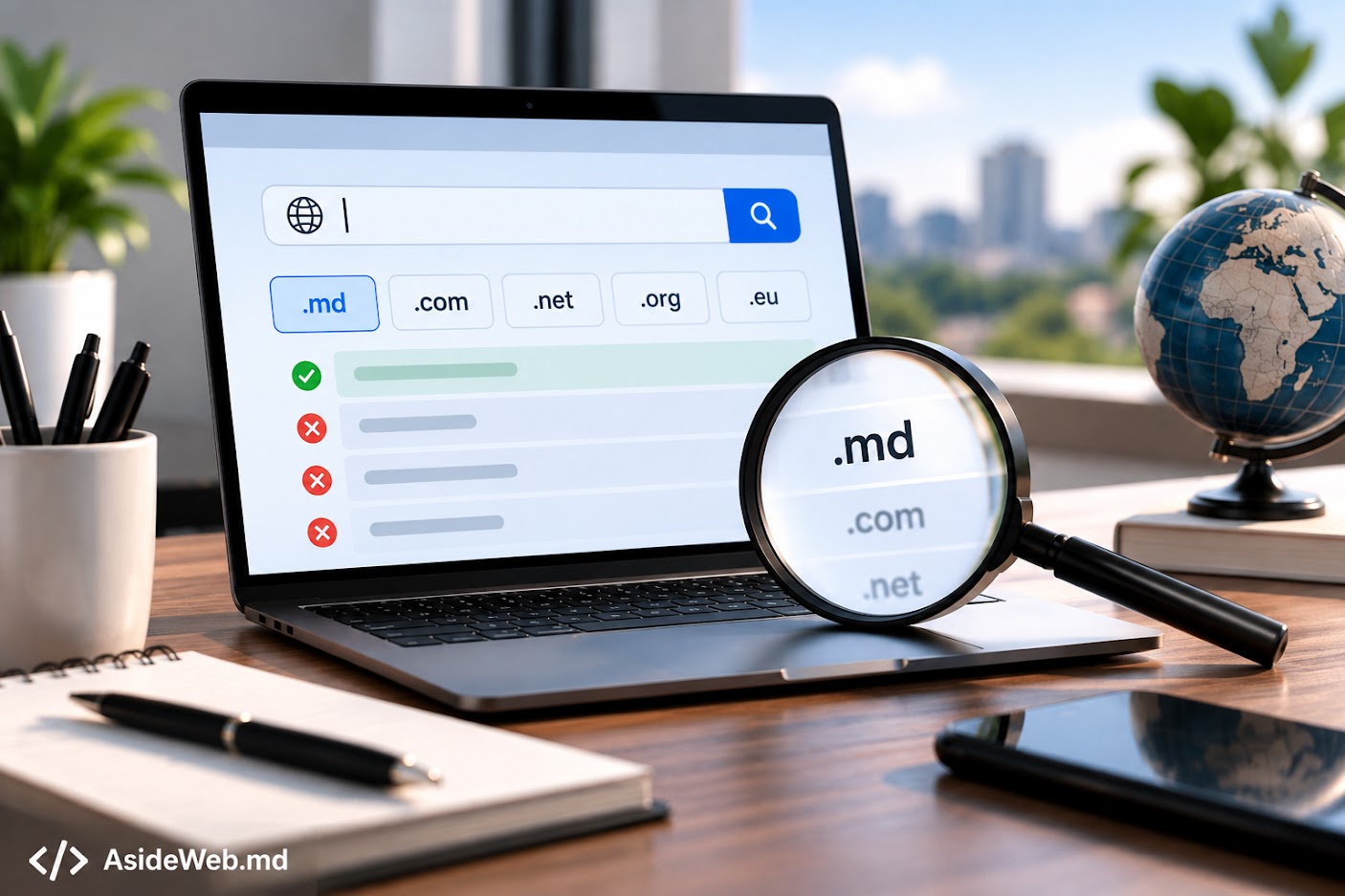
How to Choose a Domain Name for Your Website in Moldova

How to Choose a Domain Name for Your Website: What to Check Before Registration
Choosing a domain name is one of the first steps when creating a website. Your domain is the address customers use to find your business online. They may see it in Google search results, advertisements, emails, social media profiles and other business materials.
That is why you should not register the first available name without considering your options. A good domain should be clear, memorable and relevant to your business. If your company mainly serves customers in Moldova, the local .md extension is also worth considering.
1. Start with Your Brand Name
For many businesses, choosing a domain that closely matches the brand name is a sensible approach. It helps customers associate the website address with the company.
For example, if your company is called “Example Construct,” consider a domain based on the brand rather than a long combination of several keywords.
If you plan to develop your brand over many years, avoid a name that limits the business to one particular service or product category. The domain should remain relevant if your company expands.
2. Choose a Short and Clear Name
A good domain should be easy to pronounce, read and type into a browser. Where possible, avoid complicated combinations of letters, numbers and symbols.
Imagine giving your website address to a customer over the phone. If they have to ask several times how to spell it, the name may be too complicated. Before registering it, ask another person to read the name and write it down without assistance.
3. Do You Need Numbers or Hyphens?
Numbers and hyphens are not necessarily a problem, but they can make a domain harder to remember and communicate verbally.
For example, if your domain contains the number “4,” customers may not know whether to type the digit or spell out the word. Several hyphens can also increase the risk of typing mistakes.
Under .md registration rules, a domain name can contain Latin letters, numbers and hyphens, subject to the registry’s requirements. A hyphen cannot appear at the beginning or end of the name. Check the current rules before registration.
4. Choose the Right Domain Extension
After choosing the name, decide which domain extension fits your project, such as .md, .com or another suitable option.
For a company operating mainly in Moldova, the .md extension can signal a connection to the local market. A business targeting international customers may prefer .com or another extension, depending on availability and brand positioning.
The extension alone does not guarantee higher Google rankings. Choose it according to your target market, brand identity and growth plans, rather than simply because a particular name happens to be available in that extension.
5. Check Whether the Domain Is Available
Before registering a domain, check whether the name is available. For .md domains, you can consult the official .md domain registry or an authorized registrar.
If the name is already registered, do not automatically choose an almost identical alternative. Very similar addresses can confuse customers and send them to the wrong company’s website.
6. Check for Potential Conflicts with Other Brands
An available domain is not automatically suitable for your business. Before registration, check whether the name is already associated with another company, trademark or well-known project.
Search for the name online and, where appropriate, check relevant trademark databases. For an important commercial brand, additional legal review can help prevent disputes and future expenses.
7. Check the Name on Social Media
If you plan to promote your business on social media, check in advance whether a similar name is available on the platforms that matter to your audience.
The name does not have to be identical on every platform, but a consistent naming style helps customers recognize your brand and find your official profiles more easily.
8. Be Careful with Previously Used Domains
If the domain previously belonged to another project, it is worth checking its history before using it, where that information is available.
A previously used domain may have a normal history, but it could also have been used for spam, low-quality content or activities unrelated to your new business. Review available web archives and historical information. Do not assume that every older domain is problematic, but do not ignore its history either.
For an important commercial project, checking the domain’s history before registration or purchase is a sensible additional precaution.
9. The Business Owner Should Control the Domain
This is one of the most important rules. A company’s domain should not be registered under the name of an employee, website developer or another person who might later lose access to it.
The business owner should have access to the account used to manage the domain and to its administrative email address. Keep login details secure, enable available account protection and periodically check the account’s contact information.
This is especially important when an external agency or freelance developer builds the website. The provider can manage the technical work, but the business owner should retain control of the domain.
10. Do Not Confuse a Domain with Web Hosting
A domain is your website’s address, while web hosting is the service where your website’s files and data are stored. They are different services, even though they are sometimes purchased and managed together.
Your business should know who owns the domain, where the website is hosted and who has access to the relevant accounts. Keep registration documents and track the domain’s renewal date.
11. What to Check Before Registering a Domain
Use this checklist before completing your registration:
- The name is easy to read, pronounce and remember.
- The name fits your brand and business plans.
- The extension suits your target market.
- The domain is available for registration.
- The name does not create confusion with another company or trademark.
- If the domain was used before, its history has been checked.
- The management account and associated email are controlled by the owner.
- The renewal conditions and applicable costs are understood.
Conclusion
A good domain does not need to be complicated. It should be easy to remember, fit your brand and suit the market where your business operates.
It is equally important to know who controls the domain after registration. A domain is a digital business asset, so the owner should have access to the management account and its associated email address.
If you have already chosen a domain or are planning to launch a website, it is best to settle these questions before development begins. AsideWeb Studio can handle website development and technical configuration while the domain and hosting remain under the business owner’s control.
Have a Project in Mind?
Tell us about your project and we will help you find the best solution.