What Does a Business Risk by Relying Only on Social Media for Customers?

What Does a Business Risk by Relying Only on Social Media for Customers?
Social media has become an important channel for business promotion. Companies can publish offers, communicate with customers and receive orders without immediately investing in a wide range of digital channels.
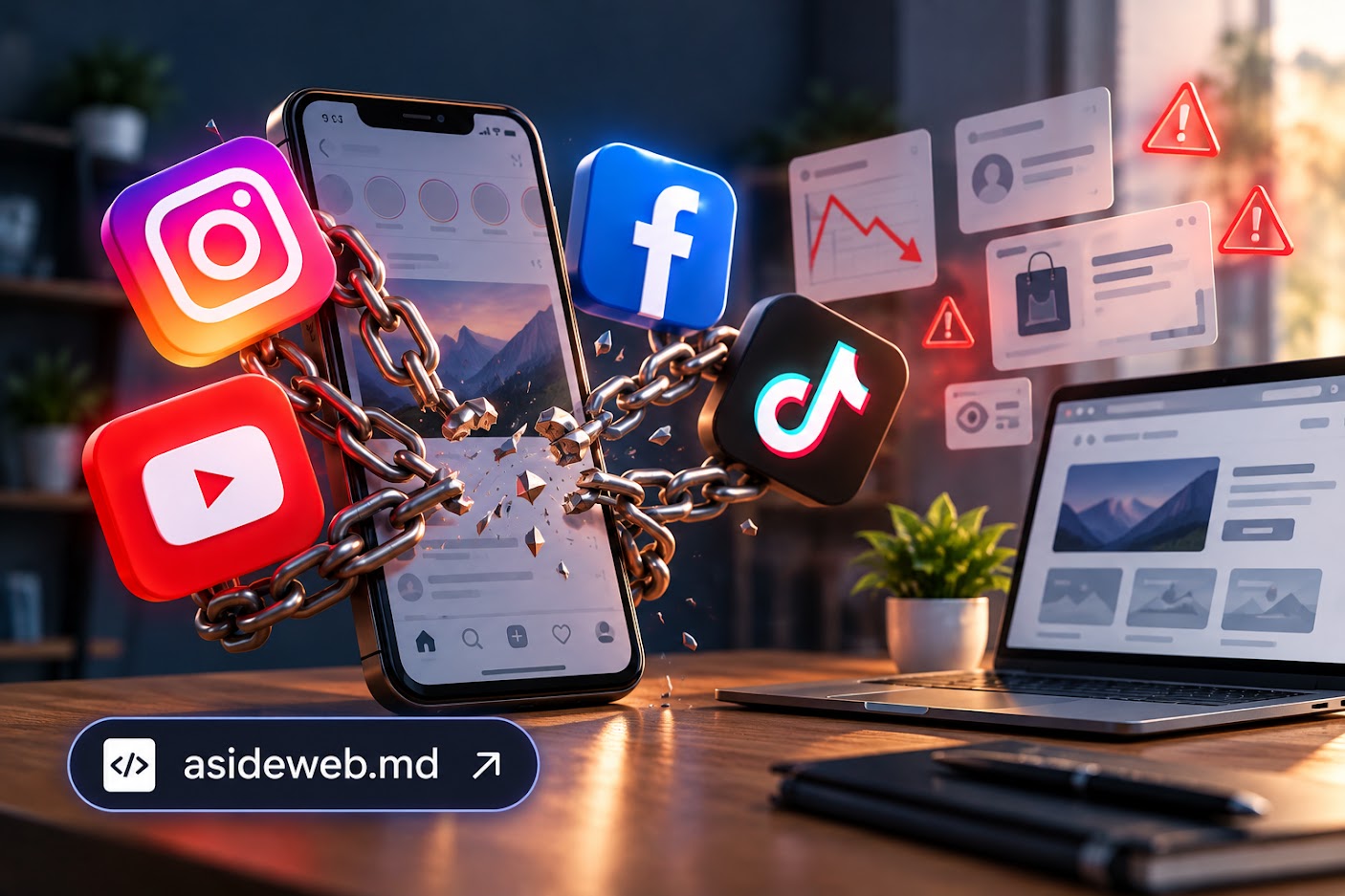
However, when almost all customers come from a single platform, the business becomes dependent on that platform’s rules and operation. Algorithm changes, account restrictions or declining post reach can affect communication with the audience and the number of inquiries received.
This does not mean social media is a bad choice. The risk arises when a business has no alternative way to reach customers. Here are the main risks and practical steps to reduce dependence on a single platform.
1. Your reach can decline even when nothing changes on your side
Publishing content does not guarantee that every follower will see it. Social platforms use algorithms to decide which posts appear in each user’s feed.
When post reach decreases, you may notice fewer views, interactions and inquiries even if your product or service has not changed. Results can also vary depending on content format, audience interest and competition.
You cannot fully control a platform’s algorithm. You can, however, monitor performance, test different content formats and avoid relying on a single source of traffic.
2. An account restriction can interrupt customer communication
An account may become temporarily unavailable because of a review, a suspected policy violation or unauthorized access. In some cases, an account may be suspended or lost.
If all orders, conversations and important contacts are stored only in that account, restoring normal operations can be difficult. Even a temporary interruption may prevent you from responding to inquiries on time.
To reduce the risk, enable two-factor authentication, use a secure email address and keep your account recovery details up to date. Avoid sharing one password among several employees. Use official access-management tools for business pages and accounts.
3. Followers are not the same as a customer database
A large follower count can create the impression of a stable audience. In reality, not every follower sees your posts, is interested in your offer or is ready to buy.
The platform also controls the follower list. You do not automatically have access to all their contact details or the ability to contact every person outside the social network.
Build direct relationships with customers who have agreed to receive communications from your business. Depending on your activity, you could maintain a responsibly managed contact list, use a CRM or offer an opt-in email subscription. Follow applicable data protection and marketing communication requirements.
4. You depend on rules you do not control
A platform can change its rules, features, advertising options or terms of use. Some changes may affect how you communicate with your audience and how much it costs to attract customers.
For example, a feature used to receive orders may change or become unavailable to certain accounts. The business then needs another way to receive customer inquiries.
A practical solution is to provide several contact options and document the order-handling process. This helps the team continue working even when one tool is temporarily unavailable.
5. It is harder to measure results without centralized records
When inquiries arrive through comments, private messages, phone calls and other channels, it can be difficult to identify which activities generate the most sales.
Without clear records, you may spend time and money on posts that generate engagement but few orders. You may also overlook unanswered inquiries or forget to follow up with potential customers.
Start with a simple record of each inquiry: its source, date, requested product or service, conversation status and outcome. If the number of inquiries grows, a CRM can help organize the process.
6. How to reduce your dependence on social media
You do not need to abandon social media. The goal is to make it an important channel without making it the only way to find and retain customers.
- Use multiple channels: test customer referrals, partnerships, advertising and other sources relevant to your industry.
- Keep track of inquiries: organize customer information in tools you control and use it responsibly.
- Provide alternative contact options: offer a phone number, email address or other suitable ways to get in touch.
- Secure your accounts: enable two-factor authentication and regularly review who has access.
- Measure business outcomes: track inquiries and sales rather than focusing only on likes and follower counts.
7. How to tell whether your business relies too heavily on one platform
Ask yourself a few simple questions:
- If you lost access to your account tomorrow, could you still receive and process orders?
- Do you have a way to contact customers outside the platform when they have agreed to receive those communications?
- Do you know which channel brings the most inquiries that turn into sales?
- Could you continue communicating with customers if your post reach declined?
- Do you have a plan in case your account is restricted?
If you answer “no” to most of these questions, it is worth gradually diversifying your acquisition channels and improving how you manage customer relationships.
Conclusion
Social media can be an effective tool for promotion and sales, but relying entirely on one platform creates risks. Declining reach, access problems and poor customer records can all affect business operations.
A more resilient approach combines several acquisition channels, secure accounts, organized customer data and performance measurement. Choose solutions that fit the size and needs of your business, and avoid making a single account the only way customers can reach you.
Have a Project in Mind?
Tell us about your project and we will help you find the best solution.