
What Is an API and How Does It Connect Your Website to Other Services?

What does API mean in simple terms?
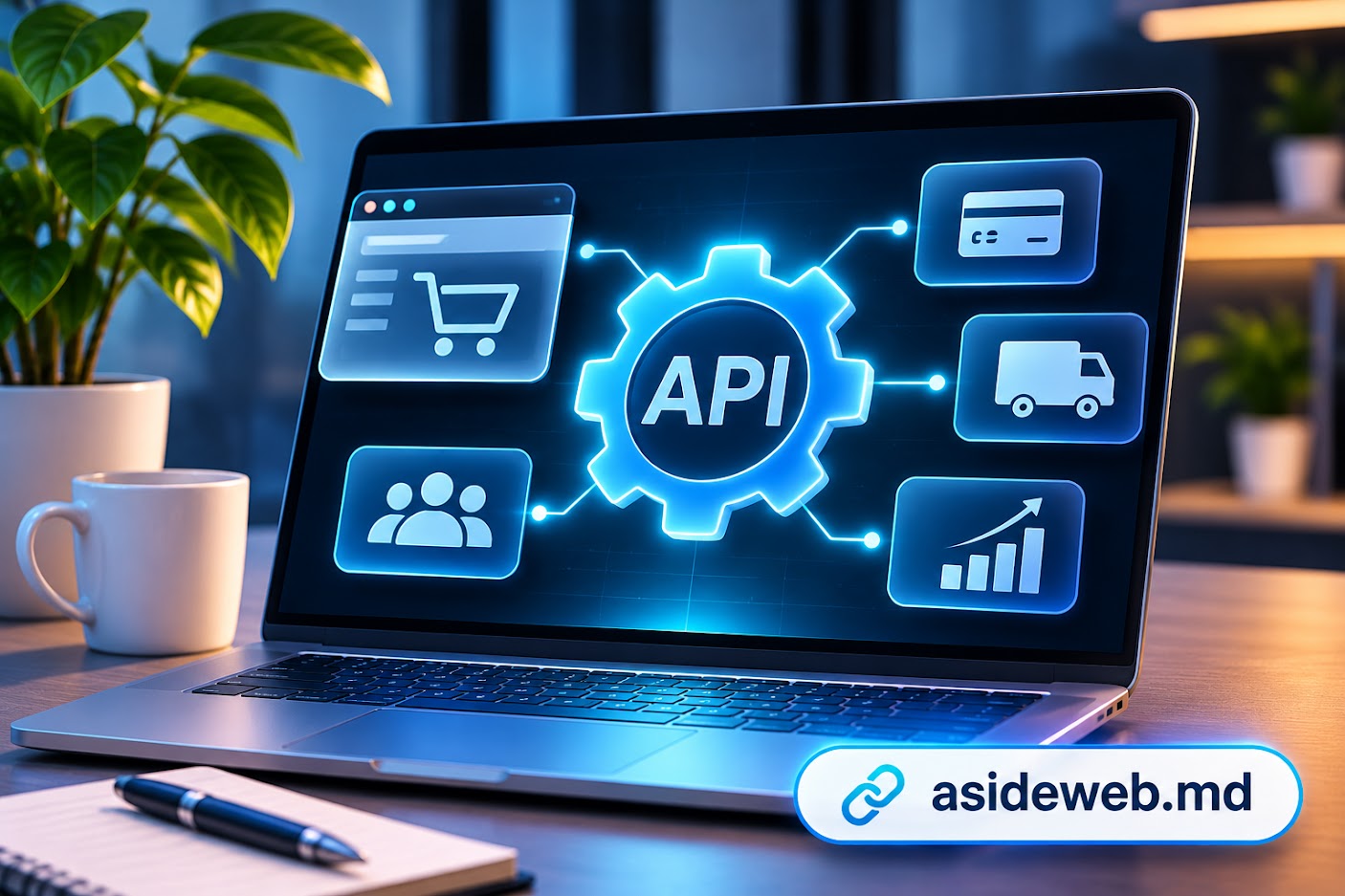
A modern website rarely operates entirely on its own. It may need to send enquiries to a CRM, receive payment information, forward orders to a delivery provider, or exchange data with an accounting system. APIs make this communication between different applications possible.
API stands for Application Programming Interface. It is a set of rules and methods that allows different software systems to communicate and exchange information.
In simple terms, an API acts as an intermediary between applications. It allows one system to request information or an action from another without requiring someone to transfer the data manually.
How does an API work in practice?
Imagine an online store. A customer places an order, and the business needs to send the order details to its CRM so that a manager can follow up and process the request.
In simplified form, the process looks like this:
- The customer completes the form and submits an order on the website.
- The website prepares the required information and sends a request through the API.
- The external system receives the request and processes the data.
- The system returns a response, such as confirmation that the order has been received.
The customer may not even notice this exchange. They submit the order once, while connected systems perform their configured tasks automatically.
Which services can be connected to a website through an API?
APIs are used in many areas of business. Depending on the project’s requirements and the capabilities of external platforms, a website can communicate with various services.
- CRM systems: automatically sending enquiries, contact details, and orders to customer management software.
- Payment services: initiating online payments and receiving transaction status information, depending on the available integration.
- Delivery services: sending shipment details and receiving delivery information when the provider offers an API.
- Accounting and inventory systems: exchanging information about products, orders, prices, and stock levels.
- Maps and location services: displaying addresses, calculating routes, or selecting a location on a map.
- Email and notification services: sending automatic messages after a form submission, order placement, or status change.
Why does a business need to connect its website to other systems?
When a website and a company’s other tools operate separately, employees may have to enter the same information in several places. For example, they might copy customer details from a website form into a CRM, check payments separately, and update order statuses manually.
A properly designed API integration can help businesses:
- reduce manual data entry;
- forward enquiries to the responsible employees faster;
- keep information consistent across connected systems;
- automate selected stages of business processes;
- extend website functionality without building every service from scratch.
For example, an enquiry submitted through a website form can automatically appear in a CRM and be assigned to a specific manager. This helps the company organise and process incoming requests more efficiently.
An API is more than just transferring data
A reliable integration requires more than connecting two applications. The communication rules must be defined: which data is transferred, when it is sent, which system processes it, and what happens if an error occurs.
Authentication, access permissions, and data protection must also be considered. Depending on the service, an integration may require API keys, tokens, request limits, or additional security measures.
Not every platform supports every type of connection. Integration options depend on the provider’s technical documentation, the access it grants, and the architecture of the systems involved.
When should you consider connecting your website to other services?
If your business regularly receives enquiries online, processes orders and payments, or uses several platforms in its daily operations, an API integration may help simplify important workflows.
There is no need to connect every service at once. A more practical approach is to identify the tasks that consume the most time or cause frequent errors and start with an integration that solves a specific business problem.
Conclusion: your website can become part of a connected system
An API allows a website to communicate with other applications and platforms, exchange information, and trigger automated processes. For a business, this creates an opportunity to bring its digital tools together into a more coordinated working environment.
When planning a website, it is worth considering not only its appearance and visitor-facing features, but also how it will communicate with the services your business relies on.
Have a Project in Mind?
Tell us about your project and we will help you find the best solution.