Cybersecurity Checklist for Businesses in Moldova: 10 AI-Powered Steps

Cyberattacks are a real threat not only to large corporations but also to small and medium-sized businesses in the Republic of Moldova. Phishing, malware, unauthorised access, stolen credentials and data breaches can disrupt business operations, cause financial losses and damage customer trust.
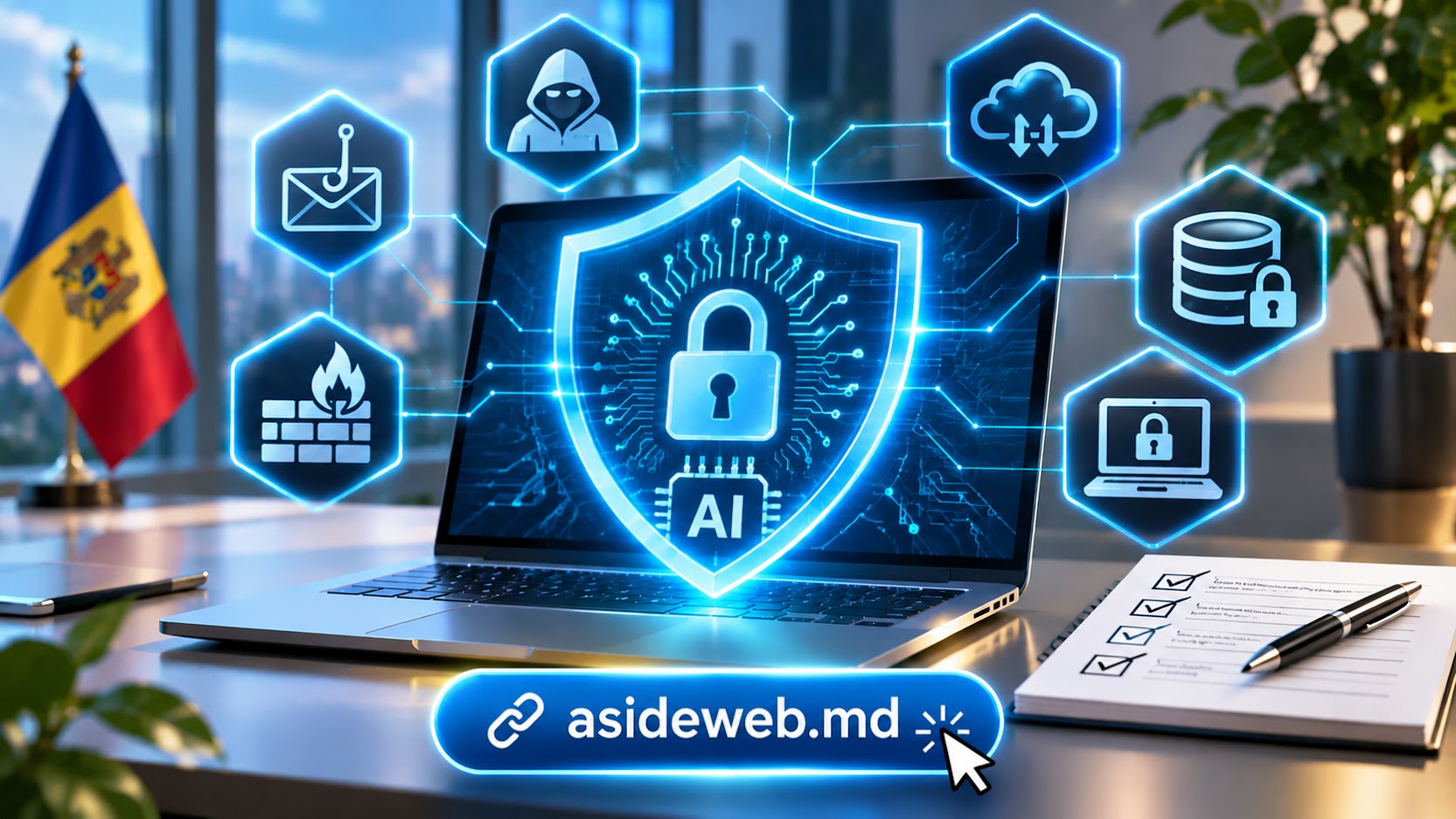
Artificial intelligence (AI) can help analyse security events, identify suspicious activity and detect potential threats more quickly. However, AI does not replace essential security measures such as software updates, backups, access control and employee training.
Here are ten practical steps to help businesses in Moldova build a more structured cybersecurity strategy and use AI-based tools effectively.
Audit Your IT Infrastructure
Start by identifying all the digital assets used by your company. Include computers, servers, network equipment, corporate email accounts, cloud services, websites, online stores, CRM platforms and accounting software.
Check which systems are outdated, where weak passwords are used, who has administrator privileges and which services are accessible from the internet. AI can help analyse event logs and identify unusual patterns, but the initial inventory and risk assessment still need to be carried out systematically.
Strengthen Corporate Email Security
Phishing remains a common attack method. Employees may receive fraudulent messages impersonating banks, suppliers, public institutions or company managers. These messages attempt to steal passwords, deliver malicious attachments or redirect users to fake websites.
Enable multi-factor authentication, configure spam filtering and set up SPF, DKIM and DMARC for your company domain. Verify unusual payment requests or bank account changes through a separate communication channel. AI-powered email filters can identify suspicious messages, but employees must still review unexpected requests carefully.
Protect Devices with EDR or XDR Solutions
EDR solutions monitor activity on computers and servers, while XDR platforms correlate security information from multiple sources. They can help identify suspicious processes, unusual file changes and other signs that a device may have been compromised.
When choosing a solution, look for centralised device management, clear incident alerts and the ability to isolate an infected device. Examples include Microsoft Defender for Business and CrowdStrike Falcon. Available features depend on the selected licence and configuration.
Secure Your Website and Web Applications
A company website may collect enquiries, orders and customer information. Keep your CMS, plugins and server software updated. Remove unused extensions and protect administrative accounts with strong passwords and multi-factor authentication.
Use HTTPS, regular backups and availability monitoring. A WAF (Web Application Firewall) helps filter malicious HTTP requests and block certain attacks against web applications. Services such as Cloudflare provide tools for protecting website traffic and applications.
Monitor Network Activity
Monitor network connections, unusual traffic volumes and attempts to access restricted resources. AI-based analytics can help identify deviations from normal activity and highlight potentially suspicious events.
Restrict unnecessary connections, segment the network where appropriate and secure remote access with VPN technology and multi-factor authentication.
Protect Databases and Personal Information
Limit database access according to employees’ roles and responsibilities. Use encryption where appropriate, maintain access and modification logs, and review the security of APIs and external integrations.
AI can help identify unusual database queries or large-scale data exports. Do not upload confidential customer or business information to public AI services without reviewing their data processing and security conditions.
Implement Multi-Factor Authentication and Access Control
Enable MFA for corporate email, CRM systems, cloud storage and administrative panels. Use individual accounts, unique passwords and a password manager. Review permissions regularly and disable accounts when employees leave the company.
Behavioural analytics can flag logins from unfamiliar devices, locations or unusual times. These alerts should be investigated because not every unusual event is necessarily an attack.
Use SIEM and Incident Response Automation
SIEM platforms collect and analyse security logs from servers, computers, network equipment and applications. Some solutions use AI and machine learning to correlate events and identify suspicious patterns.
SOAR tools can automate selected incident response tasks, such as generating alerts, collecting information and launching predefined workflows. Critical actions, such as disabling accounts or isolating devices, should be configured carefully to avoid disrupting legitimate business operations.
A full SIEM platform may be too expensive or complex for some small businesses. Wazuh is an open-source platform worth evaluating for security monitoring and event analysis, provided the company can support its configuration and maintenance.
Set Up Backups and a Data Recovery Plan
Backups are essential in the event of ransomware, hardware failure or accidental data deletion. Identify which information needs to be backed up and determine an appropriate backup schedule.
Store backup copies separately from your main infrastructure, restrict access and regularly test file and database restoration. Automated monitoring can identify backup failures, but only a practical recovery test confirms that your data can actually be restored.
Train Employees to Recognise Cyber Threats
Employees should know how to recognise phishing emails, fake websites and suspicious payment requests. Provide regular training on password security, MFA, safe file handling, suspicious links and incident reporting procedures.
AI tools can help prepare training scenarios and simulated phishing exercises. The key is to make training practical and recurring rather than relying on a single presentation.
Which AI Security Tools Can Businesses in Moldova Consider?
The right choice depends on the company’s infrastructure, number of employees, budget and data protection requirements. Businesses may consider the following solutions:
- Microsoft Defender for Business — endpoint protection and threat management;
- CrowdStrike Falcon — endpoint threat detection and incident investigation;
- Google Workspace Security — security tools for organisations using Google Workspace;
- Cloudflare — website traffic and web application protection;
- Wazuh — security monitoring and event analysis.
Before implementation, review licence costs, available features, integration options, technical support and data storage locations. AI features do not mean that every security process will operate automatically.
What Businesses Should Consider Under Moldovan Law
Businesses operating in the Republic of Moldova should consider the applicable requirements for personal data protection and information security. They should identify the purposes and legal grounds for processing, retention periods and the people authorised to access the information.
When using AI services, check what information is shared with the provider, where it is processed and stored, and whether it may be used to train models. Do not upload confidential personal, financial or business information to public AI tools without first reviewing the relevant processing conditions.
Companies should assess the applicable provisions of Law No. 195/2024 on personal data protection and the scope of Law No. 48/2023 on cybersecurity. These laws should not automatically be interpreted as imposing identical obligations on every private business. Specific obligations should be determined by reviewing current legislation and, where necessary, consulting qualified specialists.
Final Cybersecurity Checklist for Business Owners
- Audit the IT infrastructure and assess risks;
- Secure corporate email and enable MFA;
- Update and monitor business devices;
- Review website and web application security;
- Monitor network activity and remote access;
- Restrict access to databases and personal information;
- Define incident monitoring and response procedures;
- Create backups and test data recovery;
- Train employees regularly;
- Review AI tools and their data processing conditions.
Conclusion
Artificial intelligence can improve cybersecurity for businesses in Moldova by analysing events, identifying suspicious activity and automating selected processes. However, effective protection depends on a combination of technology, internal procedures and employee responsibility.
Start with essential security measures, assess your risks and introduce AI where it provides practical value. A systematic approach can reduce the likelihood of incidents and make your business more resilient to digital threats.
AsideWeb Studio helps businesses build websites, online stores and digital solutions. Explore our services to find the right solution for your company’s needs.
Have a Project in Mind?
Tell us about your project and we will help you find the best solution.